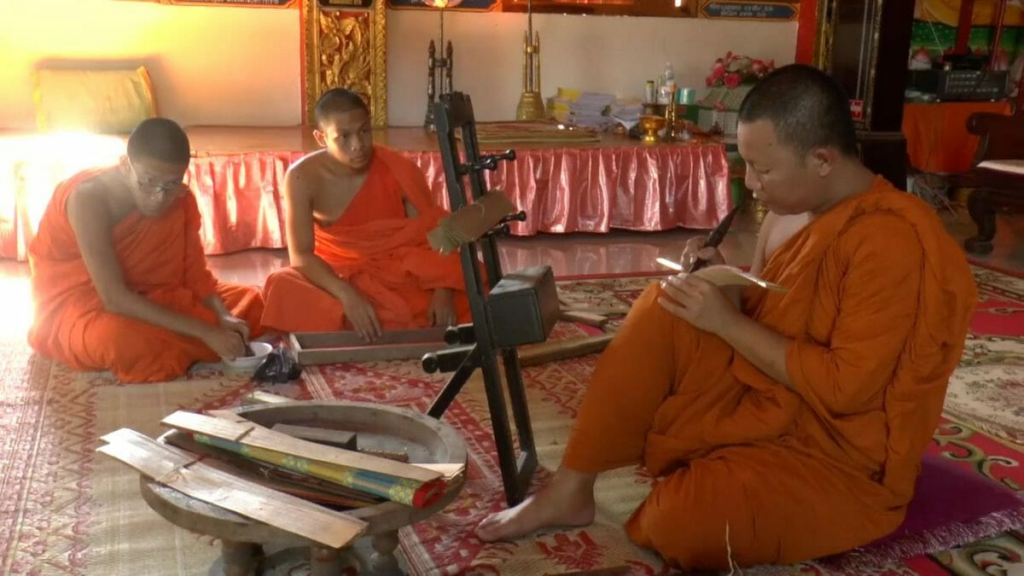
Inscribing Dhamma with Resolute Mind: The Only One in Phayao Preserving the Art of “Inscribing Lanna Palm-Leaf Scriptures” with an Iron Stylus, Dedicated to the Sasana
Palm-leaf scriptures in Buddhism are akin to a sacred jeweled umbrella that shields and preserves the Dhamma-Vinaya—the teachings of the Lord Buddha—preventing them from fading away over time. In ancient times, when sheets of paper or printing technology did not exist as they do today, ancient masters and deeply faithful Buddhist devotees dedicated their bodies and minds to crafting the Tipitaka, chanting texts, and various suttas onto palm leaves as an offering to the Buddha. However, as time passed, this high sacred art gradually faded away until it nearly became a mere legend.
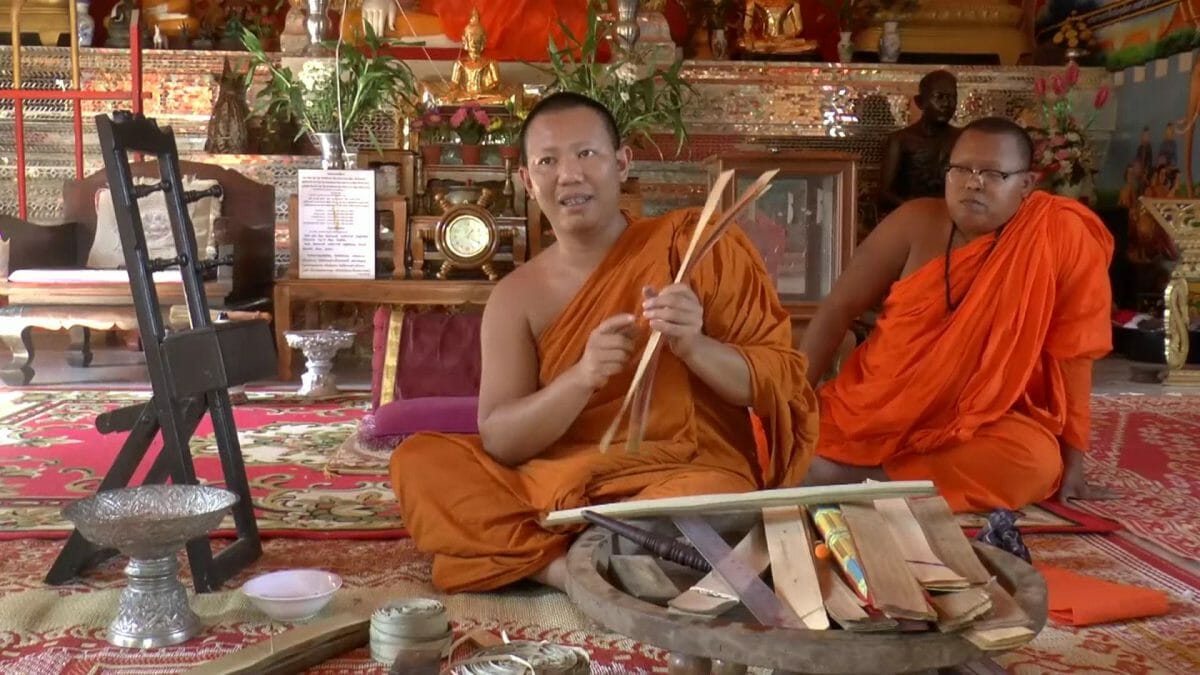
It is a great stroke of fortune and a highly auspicious omen for the northern monastic community that Phra Thossaphorn Thāvarapañño, the Abbot of Wat Phra That Pho Ngam, Moo 4, Dok Kham Tai Sub-district, Dok Kham Tai District, Phayao Province—a monk who serves as a guiding light of preservation—has stepped forward to perpetuate and revive this sacred art of faith: “Inscribing Lanna Palm-Leaf Scriptures with an Iron Stylus.” This ancient tradition has been passed down for a thousand years and is considered a distinctive religious ritual that is exceptionally rare to witness today. This is particularly true in Phayao Province, where this venerable monk remains the sole individual who still possesses expertise in this sacred discipline.
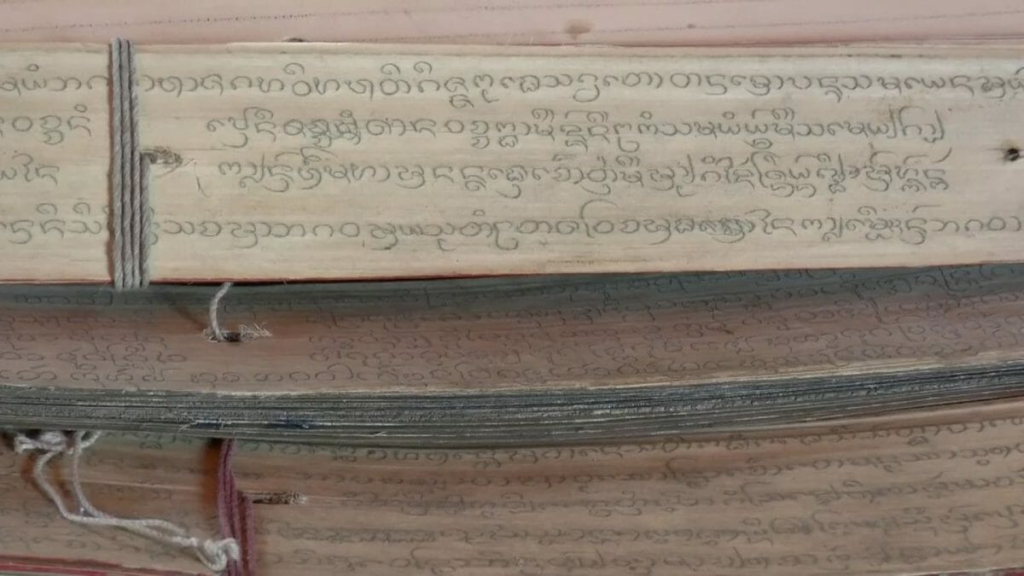
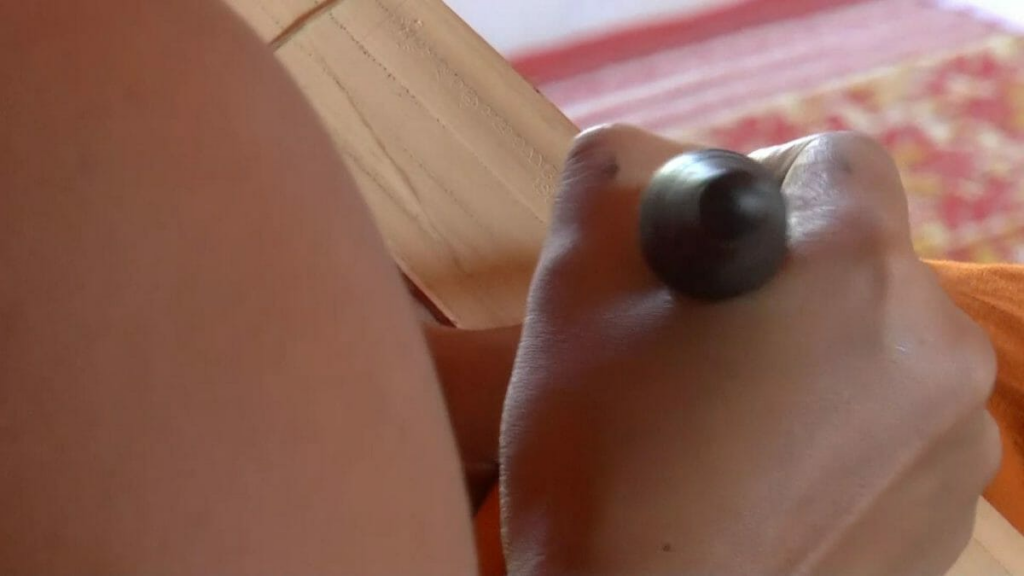
Phra Thossaphorn’s method of palm-leaf inscription is filled with utmost mindfulness and a mind firmly established in meditation. According to traditional customs, the person inscribing must sit with knees raised and place the palm leaf upon their knees, utilizing them strictly as a supporting platform for the inscription. This is a posture and an ideal entirely distinct from secular writing. The primary tool utilized is an “iron stylus,” which takes the form of an exquisitely carved wooden rod, its tip fitted with a sharp piece of steel similar to a pen, used to incise Lanna Dhamma characters into the surface of the palm leaf.
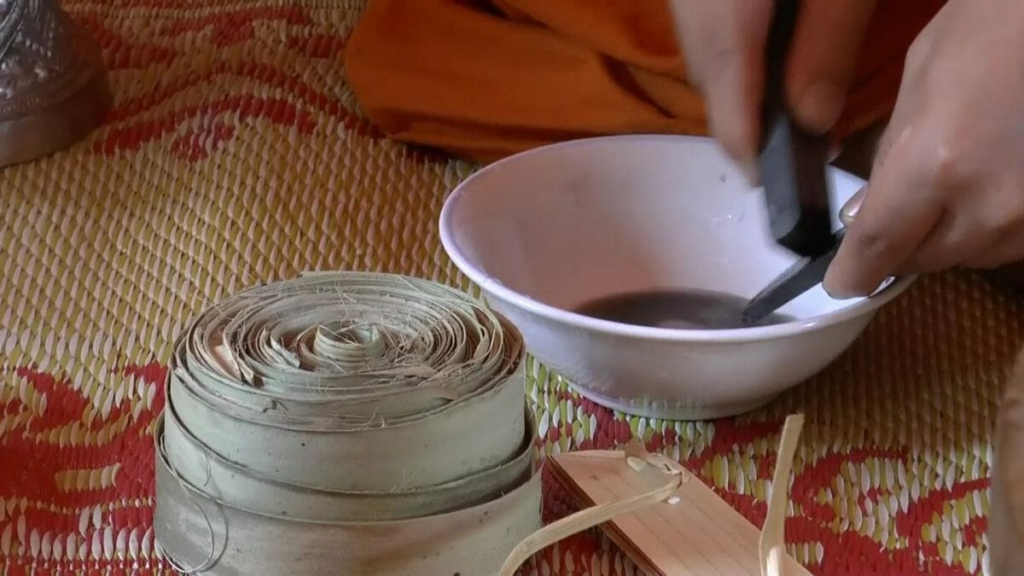
The crafting of ancient scriptures is by no means a simple clerical task; rather, it demands diligent perseverance, beginning with the meticulous selection of palm leaves, matching them to a uniform width and length. Afterward, they are placed into a wooden frame to be scored and lined into neat grid rows. Once the venerable monk has set his mind in prayer and completed the inscription of each text, ancient solid ink must be ground and mixed with water, rubbed onto the palm leaf, and then delicately wiped clean with a cloth. The ink seeps deep into the incisions made by the steel tip, revealing pitch-black Dhamma characters that are razor-sharp and possess a durability that lasts for hundreds or thousands of years without fading.
Phra Thossaphorn Thāvarapañño related the background of this faith, stating that in the past, palm-leaf scriptures served as a treasury of wisdom, consolidating the Dhamma teachings, protective incantations, traditional medicine treatises, and Buddhist history. Seeing that these things were nearing extinction due to contemporary trends, he painstakingly traveled to study and research this discipline from local elders and sages until reaching total mastery. Subsequently, he passed this knowledge on to the novices who are his monastic disciples (Saddhivihārika and Antevāsika) within the temple, as well as lay devotees and youth in the community, thereby fostering mutual support within the framework of “Bawon” (Home, Temple, School/Official Realm) and encouraging the traditional culture to remain eternally stable alongside the Lanna land.
The abbot’s dedication to preserving the inscribed Dhamma on palm leaves at Wat Phra That Pho Ngam will undoubtedly yield immense spiritual fruits and merits for the Sasana, as it serves as a concrete extension of the lifespan of Buddhism through scriptural education (Pariyatti Dhamma).
The Thai Monastic Affairs News Agency highly commends and rejoices in the magnificent meritorious deeds of Phra Thossaphorn Thāvarapañño, and mindfully prays that the sweat poured onto the tip of this iron stylus transforms into a bridge of merit, guiding the fourfold Buddhist assembly and future generations to collectively study and learn the Dhamma, remain steadfast in monastic conduct, and protect these ancient scriptures so they may endure alongside the Thai monastic community until the absolute end of time.